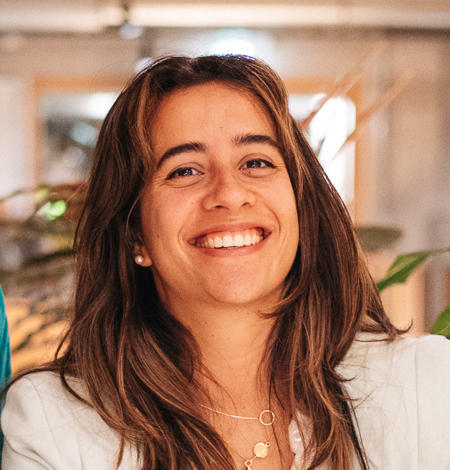
Bettina Guirkinger works with global companies to stop losing women after maternity leave, and lately she's focused that work on keeping women in tech. This year, mid-pivot from a B2C to a B2B business model, she needed the same kind of support she gives others. Here's what came out of being matched with her mentor, Zuzana, including the moment she almost talked herself into a 9-to-5.
Mentoring is one of the popular development tools out there, yet not everyone is ready to take on this adventure. Some think that they are too old (or too young), some think they are not stuck in their career enough to start a mentoring relationship, others believe that relationship is too one-sided. All of the above are common myths in mentoring and are very untrue. I have talked with three Femme Palette mentors to define these myths and see the accurate picture.
Mentoring can be a transformative experience for everyone involved. But what makes a good mentor? While sharing your personal experience and guiding your mentee toward their goals is an essential part of being a mentor, it isn’t the be-all and end-all. Here are a few other key competencies to consider when deciding if becoming a mentor is right for you.
Even though our mentors are experts in their field, mentoring is a continuous learning journey for everyone involved. That’s why we recently invited our Chief Mentor,
Cristina Muntean, to answer some of the burning questions in our Mentor Community. An expert on mentoring, coaching, and strategic communications, here’s what she had to say about some of the hot topics on our mentors’ minds.
February is Black History Month. It’s a time of celebrating Black achievement throughout history and today, but also serves as a reminder to fight the systemic racism and inequality that Black people around the world still face today. To honor this observance, we reached out to Alexis Curtis-Harris and Aicha Diarra - both Femme Palette mentors and inspirational women - to ask them about their career, their motivation to become mentors, advice they wished they had received at the start of their career, as well as their favorite Black role model.
At Femme Palette, we care about the experience of our mentees, and therefore the quality of our mentors. That’s why we have recently made changes to our mentor recruitment to make the process more selective. This blog post will guide you through the steps and show you what to expect. Here is the ultimate guide to becoming a Femme Palette mentor!
When mentee Eliska Krychova was balancing two part-time jobs and looking to start a career abroad at the same time, her mentor Anca Trandaf jumped in to help. In this interview, they reflect on their mentoring sessions, the importance of asking for help and how you can benefit from mentoring even if your needs change over time.
Since September 2020, Femme Palette has been a proud partner of Czech non-profit organization Nadání a dovednosti. For nine years already, the platform has been helping students from socially disadvantaged backgrounds to make sure their first career steps are heading in the right direction. As our give back initiative, we have been offering a couple free seats for Nadani a Dovednosti twice in a year. For each cohort, three young adults from Nadání a dovednosti’s project Rozhled were chosen to receive 6 months of mentoring from our global mentor community of experts. This year, we’re taking our partnership further and committed to help 50 young adults from the project Rozhled over the next 2 years. Keep on reading to learn more about what three of the selected mentees have achieved and why they appreciate being part of the program!
Zuzana Dobrovolna had already completed the Leadership program, but after starting a new role and chapter in her career, she felt in need of some guidance again. She joined the Mentoring program and got matched with mentor Petra Imrichova. In this interview, they discuss how mentoring has been a game changer and how important it is to be open and honest.


.png)
.png)


