Most of us have been taught that staying quiet, keeping your head down, and letting your work speak for itself is the path forward. But what if that approach is quietly costing you more than you think?
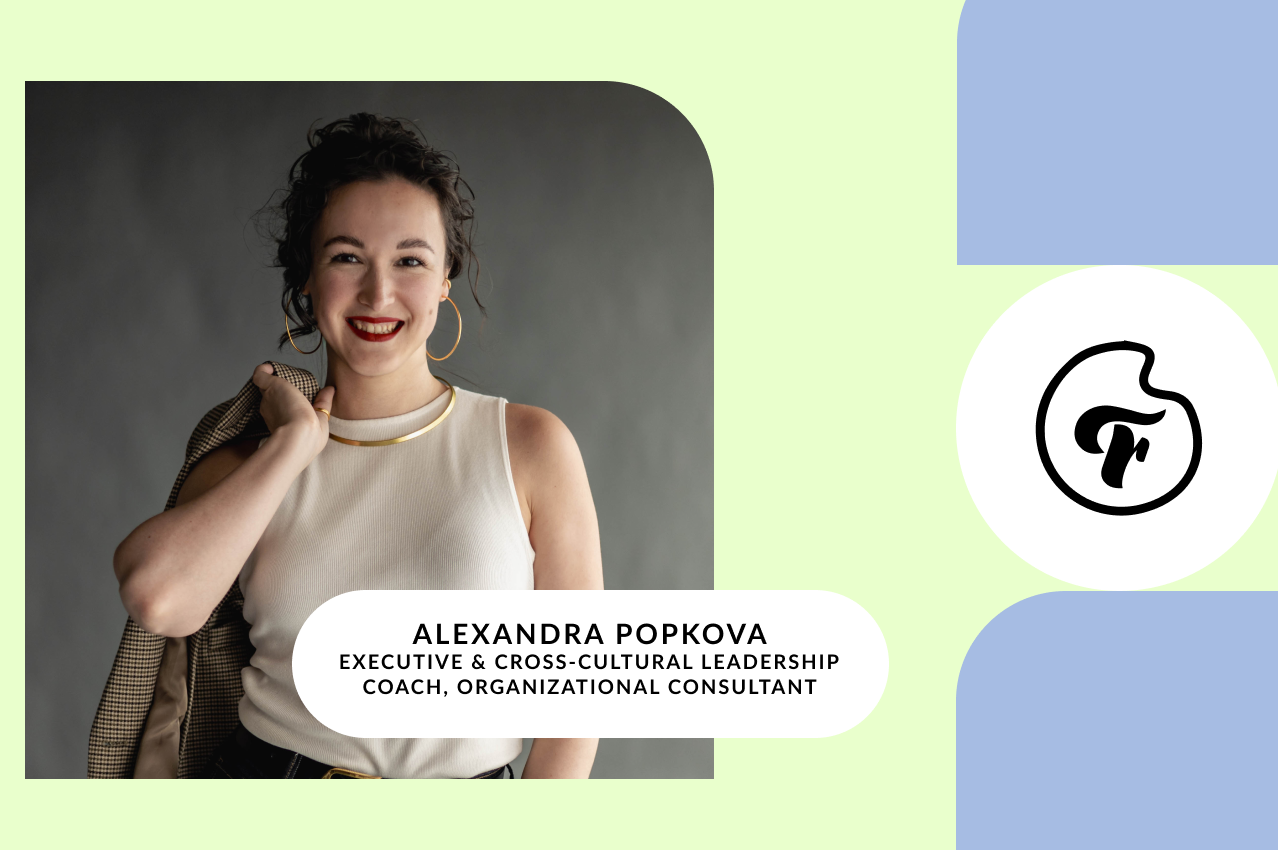
Alexandra Popkova is an Executive and Cross-Cultural Leadership Coach and Organizational Consultant with 15 years of international experience in HR and Talent. Having worked with clients from over 35 countries, she specializes in leadership development and navigating complex change, helping professionals move through uncertainty with clarity, confidence, and a lot less unnecessary drama. As a Femme Palette mentor and contributor, she brings that same grounded, no-drama approach to everything she writes.
In this article, she unpacks the real reasons women struggle with visibility at work and what you can actually do about it without becoming someone you are not.
There’s something we don’t talk about enough when it comes to visibility at work. The same behavior is often perceived differently depending on who is doing it. A man who speaks directly is seen as confident. A woman doing the same can be perceived as aggressive. A man highlighting his achievements is “strategic.” A woman might pause, rethink, or soften it to avoid being “too much.”
Over time, this creates a very real internal filter. Not just what do I think, but how will this land?
And then there’s another layer. Many of us didn’t grow up seeing a wide range of female leadership styles…at all! So when we step into more visible roles, we’re often figuring it out in real time, without a clear reference point.
So yes, the context is complex. But even within that reality, there are ways to increase visibility at work that don’t require you to become louder or someone you’re not.
Before jumping into tactics, pause here. Why do you actually want to increase your visibility at work? Is it:
Because visibility for the sake of visibility is exhausting. And honestly, not that useful. When you’re clear on your why, it becomes your north star.
It helps you:
Instead of constantly asking “Am I doing this right?” you start asking: “Is this aligned with what I actually want?”
This is probably the most common trap. You do the work. You deliver results. You support your team. And you assume… people see it. But in most organizations, they don’t. At least not fully. Not because they don’t care, but because they’re busy, focused on their own priorities, and not always connecting the dots for you.
Visibility is not just about doing good work. It’s about making your work visible in a way others can easily understand.
That means:
Not in a “look at me” way, but in a “this is what changed because of this work” way.
Let’s call it what it is. Corporate environments run on relationships, influence, and visibility of information. Not just performance or the “I’ll just do my job well” mindset.
And while “office politics” has a negative reputation, at its core it’s about:
You do need to understand the rules of the system you’re operating in. You can’t be playing chess while your colleagues and manager are playing poker… and then get frustrated you’re not winning.
Because visibility doesn’t happen in isolation. It happens through people.
This is where many careers accelerate or stall. You need people inside the organization who:
And this is where it helps to understand the difference between two roles people often mix up: mentors and sponsors. A mentor guides you, supports your thinking, and helps you grow.
A sponsor, on the other hand, actively speaks for you in rooms that matter. Both are important, just in different ways. Ideally, you have both. Sometimes it’s the same person, sometimes not.
And if you don’t have one yet, it’s worth asking:
One of the biggest mistakes I see is trying to fit into someone else’s idea of what “good leadership” looks like. Be more assertive. Be more outspoken. Be more…
It’s exhausting. And honestly, it backfires, because you’re trying to copy something instead of finding your own voice and owning it.
So instead of asking “How do I act like them?”
Ask: How can I show up in a way that feels true to me and still gets results?
There’s a statistic that comes up often: men tend to apply for a role when they meet around 60% of the criteria VS women often wait until they feel close to 100%.
And real life is not much different from this example! And real life isn’t that different. We wait until it’s polished, certain, and “ready”… and miss the chance to be part of the conversation while it’s still unfolding.
And another pattern I see a lot: women often associate being visible, speaking up, or being present with having all the answers. Like you need to be fully prepared, fully certain, fully “on top of it” to say something.
But that’s not actually how it works. Sometimes the most powerful, grounded, and yes, assertive way to show up is to say:
“I actually don’t know what the right answer is here.”
And own it. Because presence is not about always having answers. It’s about being able to engage with what’s happening, in real time, without hiding.
Visibility at work is not about becoming louder.
It’s about making sure your value is understood in a system that doesn’t automatically do that for you.
Yes, there are biases.
Yes, the playing field is not always equal.
Yes, many of us are figuring this out without clear role models.
And still, there are ways to navigate it with intention. So if anything, I’ll leave you with this wish:
May you have just a little bit of the confidence of a white, cisgender, mid-aged man…
applied wisely, strategically, and in your own style. 🙂